Expanding Evidence and Insights Through Collaboration
Mathematica’s Consulting Fellows Program

Mathematica’s Consulting Fellows Program
We recognize that collaboration drives evidence and insights. Through our Consulting Fellows program, we collaborate with trusted, top-tier subject matter experts whose skills and knowledge augment those of our own staff. These partnerships help extend the impact of our research and evaluation and enhance our capabilities to help our clients find the answers they need as they address some of the world’s toughest challenges.
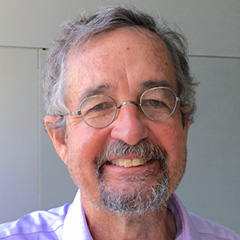
Dr. Michael Carter
Distinguished professor of agricultural and resource economics, University of California, Davis; Director, BASIS Markets, Risk and Resilience Innovation Lab; Director, Resilience+ Innovation Facility
Expertise: climate resilience measurement, specializing in agricultural economics
Dr. Michael Carter’s current research projects examine poverty dynamics and productive social safety nets; evaluate interventions to boost small farm uptake of improved technologies; and feature a suite of projects that design, pilot, and evaluate weather-based index insurance contracts to alleviate chronic poverty and deepen agricultural and rural financial markets. Carter is an elected fellow of the National Bureau of Economic Research, the Bureau for Research and Economic Analysis of Development, and the American Agricultural Economics Association.
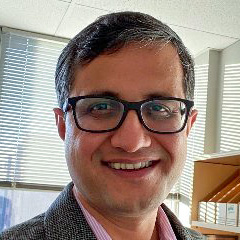
Dr. Ritvik Sahajpal
Associate research professor, University of Maryland; crop condition co-lead, NASA Harvest and NASA Acres; former data advisory council member at Foundation for Food and Agriculture Research (FFAR)
Expertise: using Earth observation data to measure agricultural outcomes
Dr. Ritvik Sahajpal’s research expertise is broadly related to developing an understanding of how sustainable practices can help mitigate climate change impacts on agriculture using Earth observation data to monitor crop yields from field to global scales; modeling the impacts of conservative agriculture practices on soil health and crop yield; and mapping land use and land cover change and modeling their impacts on the carbon-climate system. Dr. Sahajpal uses both machine learning and data driven agro-ecosystem modeling techniques in his work. His research has been funded by NASA, FFAR, and the U.S. Agency for International Development, and published in journals like Nature, Environmental Research Letters, Geoscientific Model Development, and Science of the Total Environment.
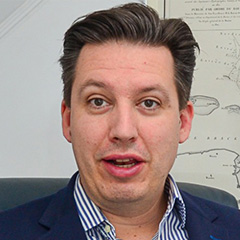
Dr. Alexander Rothkopf
Managing director, Leap Ahead GmbH
Expertise: using advanced data analytic methods and models to evaluate the impact of unforeseen events
Dr. Alexander Rothkopf’s research, policy advisory, and consulting work focuses on supply chains, supply disruptions, and resilience, as well as market insights and incentives. He works with the private sector, public entities, global health nonprofits, and disaster response organizations. He is particularly passionate about data-driven decision-making. Using small or very large data sets, he has provided insights to solve critical questions and explore new and innovative pathways for organizations to manage uncertainty, exceed stakeholder expectations, and save lives.

Walter Linde-Zwirble
Chief data scientist, Trexin
Expertise: health outcomes and data science research
Walter Linde-Zwirble is a nationally recognized data scientist and analytics industry thought leader. He has over 30 years of experience in health outcomes and data science research. Linde-Zwirble has analyzed and modeled most aspects of healthcare delivery across all healthcare industry segments and has developed health state measures and prognostic measures for improved communication between stakeholders. He has also created simulations of the Medicare payment system, calculated cost-to-charge ratios, and modeled the impact of managed care on hospital outcomes.

Paula Christen
WHO postdoctorate
Expertise: senior analyst and evidence specialist
Senior analyst and evidence specialist with 8+ years of experience leading teams and managing multi-country data analysis, reporting, and evidence synthesis for global health funders and multilateral organisations – including Gavi, WHO, and USAID. Provides technical direction on immunisation analytics, health economics, and infectious disease modelling, while overseeing the production of analytical products that translate complex data into actionable insights for programme design, resource allocation, and strategic planning. Work spans 40+ countries, with particular depth in immunisation programme analytics, equity analysis, vaccine impact modelling, and MEL system strengthening.

Xindi (Cindy) Hu, ScD, MS
Environmental data scientist; Assistant professor, George Washington University Milken Institute School of Public Health
Expertise: environmental and occupational health
Cindy Hu is an environmental data scientist and serves as an Assistant Professor in the Department of Environmental and Occupational Health at the George Washington University Milken Institute School of Public Health. Dr. Hu's research aims to understand the relative contribution of chemical exposures in environmental media on population health outcomes and health disparities and generate evidence at a large scale. To achieve this, she employs a multidisciplinary approach encompassing exposure science, geospatial data science, and health informatics. Through collaborations established in academic and applied policy research settings, she develops machine learning techniques for modeling human exposure to drinking water contaminants (PFAS) through a place-based approach. She also leverages healthcare big data, including insurance enrollment, claims data, and EHR, to discern patterns in healthcare utilization and costs at the national scale in a variety of projects, including tracking community-level drug abuse and COVID-19 burden using wastewater-based epidemiology, causally assessing the impact of heatwaves on the vulnerable population, and utilizing machine learning techniques to predict the risk of long COVID.
Prior to joining the George Washington University faculty in 2024, Dr. Hu was a Principal Data Scientist and the Chief Data Scientist of the Health Data Innovation Lab at Mathematica, Inc., a public policy research organization with the mission to improve public well-being. She established and expanded Mathematica’s environmental health research portfolio through program development and fundraising, including leading the development of several award-winning dashboards such as 19andMe and ClimaWATCH.
In addition to her research, Dr. Hu is deeply committed to inspiring the next generation of public health leaders through teaching and mentoring. Throughout her academic journey and professional career, she mentored a diverse group of students and junior data scientists. Several of them have had the opportunity to present their research at academic conferences, publish manuscripts in reputable journals, and pursue doctoral-level training. Her unique background in data science and environmental health has inspired her students and mentees to leverage advancement in artificial intelligence and machine learning for the public good.

Sydney Taylor
Monitoring, evaluation, & learning manager, Chan Zuckerberg Initiative
Expertise: evaluation design, theory of change development, and learning facilitation across large-scale, multi-stakeholder philanthropic portfolios, including strategy reviews spanning multiple geographies, grantee cohorts, and program years
Strategic researcher and learning partner with over ten years of experience helping philanthropic organizations translate complex evidence into actionable strategy. Deep expertise in evaluation design, theory of change development, and learning facilitation across large-scale, multi-stakeholder philanthropic portfolios, including strategy reviews spanning multiple geographies, grantee cohorts, and program years. Experienced working as an embedded strategic partner to foundation program teams in matrixed environments, shaping research questions, designing and executing evaluations and learning agendas, and turning findings into clear direction for senior leadership.

Dr Julia Michalow
Imperial College London
Expertise: infectious disease programme surveillance and evaluation, sexually transmitted infections, HIV, and wastewater-based epidemiology
An infectious disease epidemiologist whose work applies statistical and mathematical modeling to understand disease dynamics and evaluate strategies for prevention and control, with a focus on generating evidence to inform public health policy in low- and middle-income countries. Her current research focuses on the epidemiology of vaccine-derived polioviruses and the role of wastewater and environmental surveillance in strengthening poliovirus outbreak detection and response in Africa. Julia brings more than a decade of experience in infectious disease surveillance, monitoring, and evaluation in sub-Saharan Africa, with particular expertise in HIV and other sexually transmitted infections. Her work has included designing monitoring and evaluation frameworks, developing automated analytical pipelines for routine surveillance data, and managing multi-country studies from fieldwork through analysis and dissemination. She holds a PhD in infectious disease epidemiology from Imperial College London, an MSc in biomedical engineering from Johns Hopkins University, and a BSc in mechanical engineering from the University of Cape Town.