Policy recommendations
Mathematica co-hosted a webinar with the Blue Shield of California Foundation to share recommendations for preventing IPV through state Medicaid policy.
Progress together: Transforming and improving healthcare in California
Across California, the demand for healthcare often outpaces available supply. Workforce shortages, rising cost of care, limited primary care in rural areas, and other challenges hinder access to reliable, high-quality care.
For health leaders in the Golden State, improving the care experience for residents starts with understanding which innovative care ideas work and can scale. In a state as large and dynamic as California, what evidence is needed to turn bold concepts into real-world impact?
Mathematica’s multidisciplinary teams have partnered with state and local governments, foundations, businesses, universities, and professional associations across California for more than 50 years to turn data and evidence into decisions that inform healthcare programs and policy.
Explore how our evaluation, strategy development, and impact analyses help clients and partners understand how to strengthen care delivery and expand access across California.
"Because California is the largest state in the nation and an incubator for innovative healthcare ideas, what we do here is relevant and important to other states and the nation as a whole."
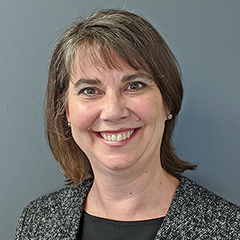
Diane Rittenhouse Senior Fellow at Mathematica
Evaluation
Tracking progress on California’s Children and Youth Behavioral Health Initiative
The Children and Youth Behavioral Health Initiative (CYBHI) represents a more than $4 billion investment to improve behavioral health for children, youth, and families across California. To understand whether this investment is delivering meaningful results, the California Health and Human Services Agency needed evidence that could track progress and inform implementation.
Mathematica is conducting a rigorous, mixed-methods evaluation of the CYBHI to track its progress from design to implementation to outcomes, ensuring the evaluation reflects the experiences of children, youth, families, and providers at the core of the initiative. The findings will provide policymakers, researchers, healthcare providers, and community leaders with clear evidence on where the CYBHI is gaining traction, where implementation needs support, and how to drive lasting improvements in youth behavioral health. The CYBHI Evaluation Hub has the latest evaluation reports, case studies, and more.
Testing integrated and in-home care for Medi-Cal members with complex needs
Effectively managing care for people with complex healthcare needs can enhance quality and reduce costs, but few models have been implemented with a Medicaid population.
To better understand how innovative care models can improve outcomes for Medicaid populations, the California Health Care Foundation partnered with Mathematica to evaluate the initial implementation of an innovative care delivery model developed by Landmark Health and two Medi-Cal managed care health plans. The model was designed to deliver coordinated services to eligible Medi-Cal managed care members with multiple medical and behavioral health needs.
Our work with the California Health Care Foundation focused on the model’s impacts and revealed that coordinated home-based services that include a behavioral health component and address patients’ unmet social needs can meaningfully reduce acute care spending.
Read the briefAssessing whether assistive technology enhances independence
Technology-based services offer a promising path as demand grows for supports that promote independence for people with developmental disabilities. The California Department of Developmental Services launched a pilot program to support people with developmental disabilities through assistive technology, and Mathematica is evaluating whether the program enhances independence, quality of life, access to services, and outcomes while helping address workforce demands.
Read moreUnderstanding improvements to preventive dental care for Medi-Cal-eligible children
Improving dental care and oral health for Medi-Cal-eligible children requires targeted, evidence-based strategies. California tested a range of approaches through the Dental Transformation Initiative (DTI), a multifaceted set of interventions designed to improve access to preventive dental services, identify dental disease earlier, and support continuity of care.
In collaboration with the California Department of Health Care Services, Mathematica evaluated the DTI using surveys, key informant interviews, case studies, and data analyses. The evaluation helped the state assess whether the DTI improved dental and oral health outcomes for children in California.
Read the reportStrategy and evidence building for better resource decisions
Gap analysis and multiyear road map for home and community-based services
Expanding access to long-term services and supports is critical for older adults and people with disabilities across California. To close gaps in both Medi-Cal and non-Medi-Cal home and community-based services, Mathematica is working with the California Department of Health Care Services and the California Department of Aging to identify and develop practical, data-driven strategies.
Using a mixed-methods approach, Mathematica is generating recommendations informed by data, grounded in the wide-ranging needs of Californians and the characteristics of their communities, and supported by key partners. To support decision making, we also developed a tool designed for policymakers, service providers, and local planners that presents the landscape of specified home and community-based services available for older adults, people with disabilities, and caregivers in each California county.
Read the Report
Preventing intimate partner violence through Medicaid policy
Intimate partner violence (IPV) is a public health crisis, and state Medicaid programs are critical to addressing and preventing it. Mathematica partnered with Blue Shield of California Foundation and Futures Without Violence to identify and analyze strategies Medicaid agencies can use to work with managed care organizations, healthcare providers, and IPV experts.
Through a landscape review, expert consultations, and focus groups, Mathematica developed policies to help Medi-Cal and other state Medicaid agencies partner with managed care organizations, healthcare providers, and IPV experts to adopt and integrate practices that interrupt the cycle of intergenerational violence. Our final report will synthesize the state of the evidence base for interventions that prevent IPV and address the needs of those affected by it.
Addressing the healthcare workforce crisis
In California, policymakers seek to develop a workforce prepared to meet the state’s growing healthcare needs. To support these efforts, Mathematica partnered with the California Health Care Foundation on a body of work to inform healthcare workforce planning across the state:
- We conducted a rapid review of evidence on the highest-impact strategies for investing in the healthcare workforce, sharing the findings and implications with the director of California’s Office of Statewide Health Planning and Development.
- We developed policy recommendations for supporting the education and training of interprofessional primary care teams in California to improve care quality, patient outcomes, and access to care while decreasing provider burnout and reducing healthcare costs.
- We worked closely with the Department of Health Care Access and Information to launch the California Health Workforce Education and Training Council in 2022, and continue to conduct research and prepare reports that inform its work
- We are evaluating the impact and return on investment associated with the implementation of an AI-powered scribe tool designed to support safety net healthcare providers and developing a guide for others considering applying this technology.
Photo Credit: @TrustYourStruggleCollective, @erinyoshi, @Nisha.k.Sethi, @misterbouncer
Impact analysis
Analyzing the impact of the sugar-sweetened beverage tax in Oakland
Since 2015, a handful of U.S. cities have taxed soda and other sugar-sweetened beverages. With funding from the Robert Wood Johnson Foundation, Mathematica studied the impacts of Oakland’s sugar-sweetened beverage tax on retail prices, purchases, and child and adult consumption of beverages.
The Robert Wood Johnson Foundation sought to learn more about populations with historically high rates of diet-related chronic disease, with a focus on their consumption of sugary beverages. As a result, Mathematica oversampled stores in areas where consumption of such drinks was higher. This enabled us to assess the impact of the tax for these populations and for Oakland overall after applying sample weights. Learn more about the Oakland study in the article published in Economics & Human Biology or by listening to our On the Evidence podcast.
Listen to PodcastThe effects of the Healthy Davis Together program
During the COVID-19 pandemic, local leaders in Davis, California, launched Healthy Davis Together to reduce transmission and protect community health. Mathematica conducted an independent evaluation to assess its impact on disease spread, testing uptake, health behaviors, perceptions, and economic indicators. We found the program reduced infections and helped prevent hospitalizations and deaths, which gave local leaders evidence on the value of a coordinated community response.
Read the ReportRelated Staff
To connect with one of our experts on these projects or to get more information about our health work in California, please email to info@mathematica-mpr.com.