
Analysis of the Early Childhood Longitudinal Study: Kindergarten Class of 2010-2011
Prepared for:
Sesame Workshop
Prepared for:
Sesame Workshop
This report provides an analysis of the Early Childhood Longitudinal Study, Kindergarten Class of 2010-11, focusing on the school readiness and abilities of beginning kindergartners.
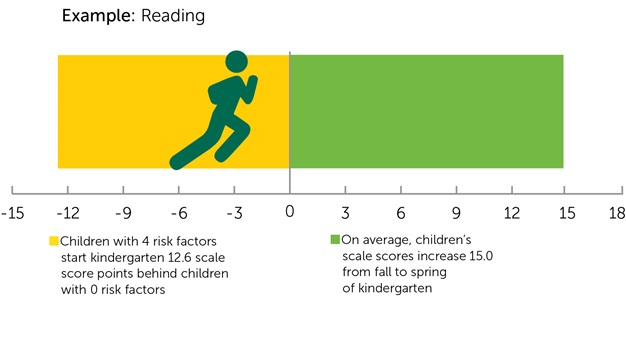
The analysis examined four risk factors that have been shown to affect children's development and school achievement: single parent households, mothers with less than a high school education, households with incomes below the federal poverty line, and non-English speaking households. High-risk children (those with all four risk factors) were found to be almost a year behind their peers with no risk factors in their reading and math abilities.
The researchers also created composite readiness scores based on teacher ratings of children's academic and social skills. Based on the researchers' calculation, less than one-third of children were rated by teachers as "in-progress" or better on both reading and math skills.

To solve their most pressing challenges, organizations turn to Mathematica for deeply integrated expertise. We bring together subject matter and policy experts, data scientists, methodologists, and technologists who work across topics and sectors to help our partners design, improve, and scale evidence-based solutions.
Work With Us