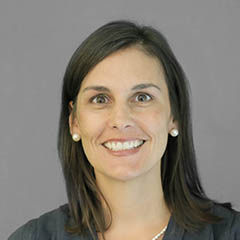
Kristin Hallgren
Director of Human Services Foundations and Nonprofit Partnerships
View Bio Page
A strategic blueprint for linking pre‑K‑12, postsecondary, and workforce data to power effective pathways

The Education-to-Workforce (E-W) Indicator Framework offers a clear roadmap for aligning goals and tracking progress across pre-K-12, postsecondary, and workforce systems.
State and local leaders across the U.S. are working to create seamless education-to-career pathways but face persistent challenges: siloed agencies, inconsistent metrics, and disconnected data systems. As a result, it’s difficult to track whether learners are progressing through key transitions, from pre-K to elementary school, to high school, to postsecondary education, to meaningful employment.

The Education-to-Workforce (E-W) Indicator Framework offers a clear roadmap for aligning goals and tracking progress across pre-K-12, postsecondary, and workforce systems. As a strategic planning tool, it helps states strengthen connections across systems and use data more effectively to inform action. Specifically, the framework helps states to:

As part of its effort to build a more connected education and workforce data system, Nebraska’s Statewide Workforce & Educational Reporting System (NSWERS) used the Education-to-Workforce (E‑W) Indicator Framework to guide indicator selection and strengthen cross-agency alignment. The framework helped NSWERS prioritize predictive measures, uncover data gaps, and inform state-level policy discussions:
Better-connected education and workforce systems—grounded in shared goals, consistent metrics, and action-ready data—enable communities to create more effective pathways that help every learner succeed, from the classroom to their career.
To solve their most pressing challenges, organizations turn to Mathematica for deeply integrated expertise. We bring together subject matter and policy experts, data scientists, methodologists, and technologists who work across topics and sectors to help our partners design, improve, and scale evidence-based solutions.
Work With Us