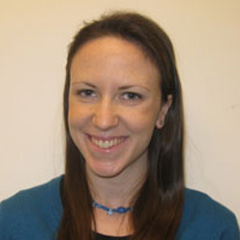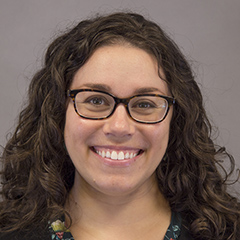
Lauren Tingey
Principal Researcher
View Bio Page
Mathematica partners with Tribal and Indigenous governments, organizations, and communities to strengthen programs and policies. Together, we collaborate on program evaluations, research studies, and technical assistance that support community priorities and advance Tribal self-determination.
Our approach centers local context and shared learning over time and is guided by community priorities in areas such as family support, child welfare, mental health, and economic stability.
We conduct research with and for—not about—Native communities, emphasizing transparent communication and shared decision-making throughout each project. From initial design through final evaluation, Native voices guide research questions, methods, interpretation, and the use of findings.
In partnership with the Administration for Native Americans and a community working group of Elders and experts in Native language, we developed a national survey to assess the status of Native American languages spoken across the United States. The working group shaped the survey’s design, content, and administrative approach to reflect the variety of languages and community contexts across Tribal Nations.
Data represent people, families, and communities, and we want to fully respect how important it is that any data we collect with Tribal communities are treated with sensitivity.
In designing culturally responsive technical assistance and evaluation plans, we collaborate closely with Tribal leaders, program staff, and community members. This helps ensure that the training and support we provide reflect local knowledge and context.
We partnered with the Standing Rock Sioux Tribe to adapt and use Goal4 It!—an employment coaching model—in collaboration with the Tribe’s workforce services team. Together, we tailored Goal4 It! to the Tribe’s specific workforce programs and community needs. This work builds on a broader partnership with North Dakota where we are supporting the state’s economic assistance programs to strengthen collaboration with Tribal Nations. We planned and facilitated two in-person summits in 2025 involving three Tribes to improve how state-run programs serve Tribal citizens and communities.
We walk the journey from inquiry to insight with our clients as a team, to partner with communities in ways that align with Tribal self-determination and promote Tribal sovereignty.
To strengthen our commitment to the support of locally led program improvements, Mathematica staff are trained in Indigenous research methods, including talking circles, Two-Eyed Seeing, and Indigenous Appreciative Inquiry. We also have extensive experience working with Tribal Institutional Review Boards, Tribal Councils, and other local research review boards to ensure data stewardship follows the rules and priorities of each participating community.
Together with the National Indian Health Board and the Robert Wood Johnson Foundation, we conducted a comprehensive cost estimate of healthcare services provided by the Indian Health Service. The analysis produced community-informed recommendations to improve access to high-quality healthcare for all Native American communities.
Mathematica’s Tribal partnerships include direct work with Tribal Nations and Tribal-serving organizations, inter-Tribal collaborations, and coordination among Tribal and state partners, federal agencies, and national foundations.
Contact our team to explore a partnership.