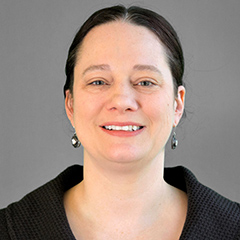
Jonathan McCay
Senior Managing Consultant
View Bio Page
How small, practical tips and tools can support parents during a pivotal stage of child development

When caseworkers introduced Vroom intentionally, parents were more likely to explore it, use it regularly, and say it was 'very helpful'.

Families taking part in the Temporary Assistance for Needy Families (TANF) program often juggle the challenges of employment, parenting, and financial instability. Nearly 1.5 million children live in households receiving TANF, and about one-third of these children are under age 5—a period when their interactions with adults can have a powerful impact on their development.
Vroom Tips™, a science-based early learning resource from the Bezos Family Foundation, offers free tips and tools that can help parents and caregivers turn everyday activities into learning opportunities. The foundation saw a promising opportunity to connect with more families by introducing Vroom through TANF programs—reaching parents through the caseworkers who are already helping them with family stability and employment.
To test this idea, the Bezos Family Foundation partnered with Mathematica to evaluate whether Vroom could be successfully integrated into TANF services and whether doing so could boost parent engagement with Vroom and participation in TANF itself.

Mathematica designed and implemented two experimental evaluations in partnership with county TANF agencies in Larimer County, Colorado, and Mecklenburg County, North Carolina. Each county tested different approaches for introducing Vroom to newly enrolled TANF participants.
Mathematica tracked participants’ uptake of Vroom; how helpful they perceived Vroom to be; and their short-term TANF engagement outcomes, including reported TANF experiences and meeting attendance.

Mathematica found that an intentional, personalized introduction to Vroom increased parents’ engagement with Vroom and with TANF itself.
In Larimer County:
In Mecklenburg County:
Together, these findings show that embedding Vroom into TANF coaching sessions leads to take-up of the resource and can modestly but meaningfully increase program engagement, supporting parents’ goals and the broader objectives of TANF.
To solve their most pressing challenges, organizations turn to Mathematica for deeply integrated expertise. We bring together subject matter and policy experts, data scientists, methodologists, and technologists who work across topics and sectors to help our partners design, improve, and scale evidence-based solutions.
Work With Us