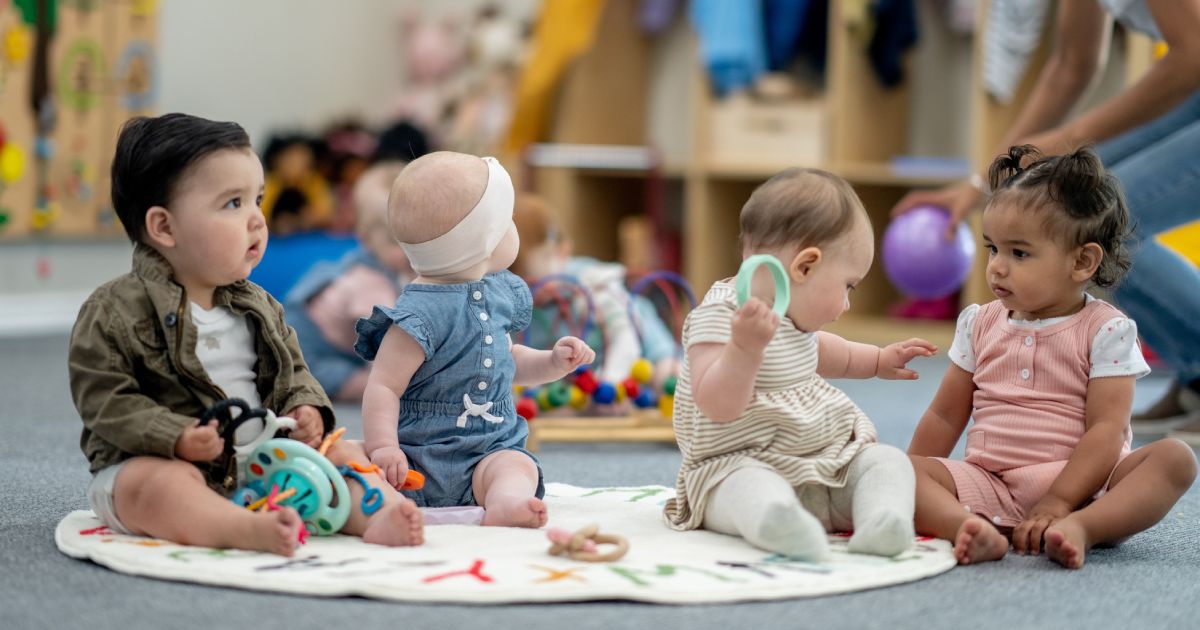
Designed for low-income pregnant women and families with infants and toddlers up to age three, the programs provide a wide range of services through multiple strategies. Offerings include child development services delivered in home visits or child care settings, as well as case management, parenting education, health care and referrals, and family support.
Mathematica's six-year descriptive study of Early Head Start built on the success of Head Start’s flagship study, the Family and Child Experiences Survey (FACES). The Early Head Start Family and Child Experiences Survey (Baby FACES) was designed to be a rich source of data describing the experiences of children and their families in Early Head Start. Important data sources were direct child assessment and videotaped parent-child interactions at ages two and three; interviews with parents, teachers, home visitors, and program directors; observations of the home environment, home visits, and child care settings; and ongoing reports of program services families and children receive.
Designed for low-income pregnant women and families with infants and toddlers up to age three, the programs provide a wide range of services through multiple strategies. Offerings include child development services delivered in home visits or child care settings, as well as case management, parenting education, health care and referrals, and family support.
Mathematica's six-year descriptive study of Early Head Start built on the success of Head Start’s flagship study, the Family and Child Experiences Survey (FACES). The Early Head Start Family and Child Experiences Survey (Baby FACES) was designed to be a rich source of data describing the experiences of children and their families in Early Head Start. Important data sources were direct child assessment and videotaped parent-child interactions at ages two and three; interviews with parents, teachers, home visitors, and program directors; observations of the home environment, home visits, and child care settings; and ongoing reports of program services families and children receive.
Findings for children at age 2 included:
- Programs offered services at recommended levels (weekly home visits and four or five center days per week).
- Families received many but not all of the services offered to them. On average, those in the home-based option received about 3 visits per month, and those in the center-based option received about 3.5 days per week from age 1 to 2.
- Program services, delivered both in home visits and center-based classrooms, scored in the mid-range on observed quality.
- While parent reports show that 2-year-old Early Head Start children are near their same-age peers in general development; they place below national norms on measures of language development.
Findings for children at age 3 included:
- Three-year olds in showed improvement over time in terms of language and social and emotional development, and they are in good health
- Families "take up" a large proportion of the services offered.
- Families that enroll before a baby is born stay in the program longer.
- Greater family involvement in Early Head Start is associated with positive behavioral outcomes for children.
Mathematica identified a representative sample of 89 Early Head Start programs with two cohorts of children (and their families) in each program: (1) newborns, and (2) a group of infants approximately one year old. Data were collected annually, in the spring, until the sample children reached three years of age or left the program.
Mathematica's partners in the study were Branch Associates, Brenda Jones Harden, Judith Jerald, and Twin Peaks Partners, LLC. In addition, a large number of early childhood development and measurement experts serve as consultants.