
Melissa Azur
Principal Researcher
View Bio Page
How Mathematica’s software development team used agentic AI to deliver new capabilities faster for SAMHSA’s SPARS platform
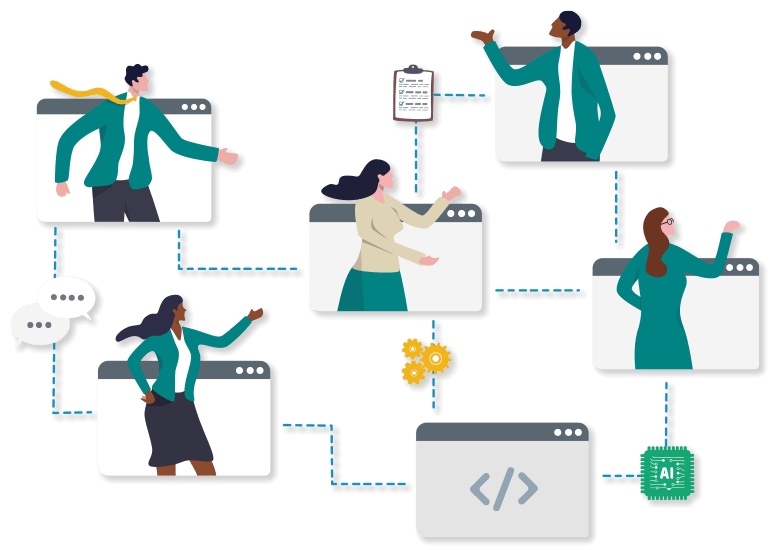

Agentic AI enabled Mathematica’s software engineering team to deliver new SPARS features faster while maintaining the quality and reliability required for a mission-critical government system.

The Substance Abuse and Mental Health Services Administration (SAMHSA) needed new functions added to its Performance Accountability and Reporting System (SPARS) on an aggressive schedule. SPARS is SAMHSA's enterprise platform for collecting, managing, and reporting performance data from behavioral health grant programs, making it a critical tool for program oversight and accountability. Success depended on developing and deploying the new features quickly while maintaining the same levels of quality and reliability expected of a production system.

Mathematica modernized its software engineering workflow by incorporating OpenAI Codex into day-to-day development. By supplementing engineering expertise with agentic coding assets, AI helped the team move more efficiently from development through troubleshooting.
Our developers used Codex to generate code, investigate production issues, and support software integration. Staff reviewed, tested, and validated every AI-generated change before deployment, ensuring that human judgment, security, and quality control remained central to every production release.

AI-augmented development increased our delivery capacity while helping us maintain the engineering standards required for a government production system.
The SPARS project shows how agentic AI can help experienced software engineering teams work more efficiently when combined with disciplined engineering practices, a proven quality management system, and human oversight. The result was greater productivity, faster resolution of production issues, and timely delivery of new capabilities for a critical government system.
To solve their most pressing challenges, organizations turn to Mathematica for deeply integrated expertise. We bring together subject matter and policy experts, data scientists, methodologists, and technologists who work across topics and sectors to help our partners design, improve, and scale evidence-based solutions.
Work With Us